When Flowers Write the Plot: The Secret Language of the Big Screen
There are details in cinema that go unnoticed, and others that, silently, support the entire framework of a story. We're used to thinking of floral arrangements as a simple prop, a splash of color placed on a dining table, or a bouquet offered out of pure politeness.
But when direction meets botanical sensitivity, the flowers in the cinema they stop being extras and become the real protagonists of the narrative.
With the arrival of September, the magical atmosphere of the big screen returns to make us dream. But before we set our eyes on the red carpets and the spotlights of the famous Venice Film Festival, it is worth exploring how flowers in cinema have often held the crucial points of the most romantic and fascinating plots.
The Role of Flowers in Cinema: When the Plot Depends on a Petal
In some memorable films, the language of flowers In cinema, it's not just a side dish, but an indispensable narrative mechanism. If we removed the flower or botanical element, the story simply couldn't exist or would take a completely different direction.
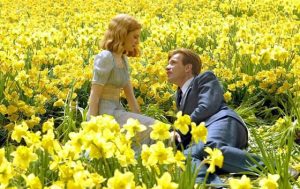
1. The perfect declaration of love: the flowers of Big Fish
If we talk about gestures capable of making the heart beat, the scene signed by Tim Burton in the film Big Fish is unsurpassed. When the protagonist Edward Bloom decides to finally conquer the woman of his life, he doesn't give her a simple bouquet: he covers the entire lawn in front of her window with thousands of yellow daffodils, his favorite flowers. It is the flower itself that moves the action, transforming a courtship into an unforgettable fairy tale and demonstrating the poetic power of flowers in romantic cinema.
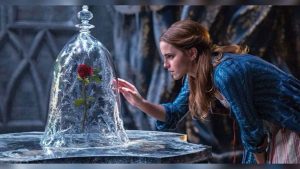
2. The hourglass of life: The Rose Beauty and the Beast
No Beauty and the Beast, The enchanted rose preserved under the glass case is not simply a gift, but the driving force of the entire story. The flower marks the time of the Prince's destiny: each falling petal marks the imminent approach of eternal damnation, transforming itself into a veritable biological hourglass. It symbolizes the fragility of emotions and the need to learn to love before it's too late.
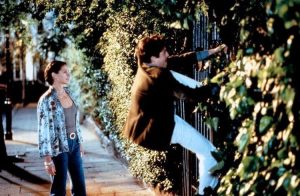
3. The refuge of feelings: The secret garden in Notting Hill
In one of the most beloved romantic comedies of all time, greenery and nature mark the turning point in the relationship between William (Hugh Grant) and Anna (Julia Roberts). Climbing over the gate to enter the private garden of Rosmead Gardens at night is the moment the Hollywood star strips away her defenses. There, on the bench surrounded by plants, the plot reveals the film's most intimate message through the dedication: “For June, who loved this garden. From Joseph, who sat beside her.”. A scenic detail that guides both protagonists towards what really matters.
From the Venice Lagoon to Floral Art
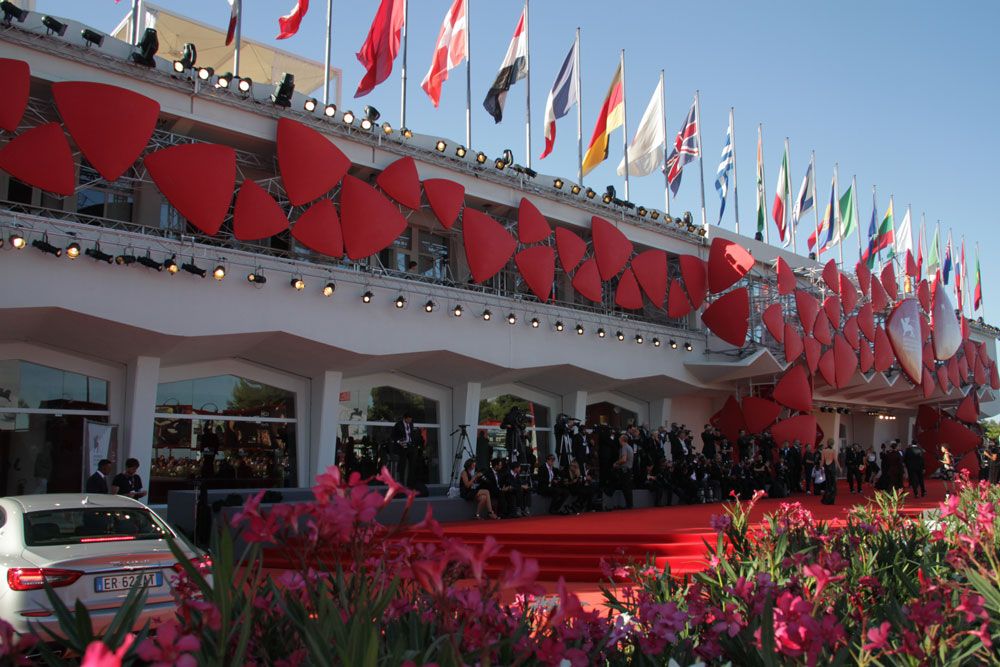
Right at this time of year, the Venice International Film Festival turns the spotlight once again on the lagoon, featuring preview screenings and the biggest stars. Venice itself is a living stage, where art marries the allure of meticulously crafted details.
In a film, as in reality, the scenic composition is what transforms a simple setting into an unforgettable moment: it is the decorative and scenographic power of nature, capable of dressing spaces and guiding emotions. It is the same search for harmony and visual wonder that I dedicate to the design of my Floral arrangements.
Learning to observe flowers in cinema means discovering a new level of interpretation: a secret code that directors entrust to nature to reveal the most intimate nuances of their characters.